

Booklet: The Truth about the NT Intervention
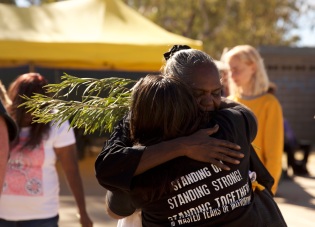
22 OctOur booklet was finished at the end of June 2022 and has been distributed to many of the people who are pictured or quoted in the booklet. Changes were made and a second edition was produced in September. We are now working on a third edition with changes to include feedback we have received.
Aboriginal Peoples of the Northern Territory Response to the Northern Territory Intervention. Melbourne, 29th June 2017
3 JulAboriginal Peoples of the Northern Territory Response to the Northern Territory Intervention
Melbourne
29th June 2017
In solidarity with the Mparntwe-Alice Springs Stand Up 2017 statement and the Laynhapuy Homelands Aboriginal Corporation statement on the impacts of the Northern Territory Intervention:
We, Aboriginal peoples of the Northern Territory, “wish to place on record our sadness and disappointment about the Tenth Anniversary of the Northern Territory Intervention.”
We share our lived understanding that the Intervention was “ill-considered, outrageously expensive to the Australian people and has achieved nothing for [our peoples]. We have seen less services, less funding and less true engagement and consultation than ever before.”
We affirm that “the racist and patronizing attitudes that drove the Intervention continue undiminished. Both Liberal and Labor parties have continued the ideology of the intervention.”
We insist on government recognising the distinctive identities of our peoples and cultures in framing a creative policy and practice together.
We are determined to find a new way forward. It is time for the Government to give us the power to determine our lives. It is time for the Government to admit that the Intervention has failed to improve the lives of First Nation peoples.
In solidarity with the Mparntwe-Alice Springs Stand Up 2017 Statement we call for:
Repeal of racist Intervention and Stronger Futures laws.
Reinstatement of community governance
Return support of homelands
Return of community control over housing and community living areas.
Bilingual education
Healing spaces not prisons
Genuine community job programs. No CDP
Stop compulsory income management
Discontinue Stolen Generations
Sovereign treaty
CALLS from our gathering of Aboriginal peoples of the Northern Territory
29 June 2017
1. We, Aboriginal peoples of the Northern Territory, call for an apology to the men of the Northern Territory and their families and communities.
We demand an apology from the five Prime Ministers responsible and their key ministerial strategists,
Prime Ministers: John Howard, Kevin Rudd, Julia Gillard, Tony Abbott and
Malcolm Turnbull.
Ministers- for Families, (Housing), Community Services and Indigenous Affairs:
Mal Brough and Jenny Macklin.
Minister Indigenous Affairs: Nigel Scullion.
2. We call for the repeal of the Stronger Futures and related legislation.
3. We call for the return of self-determination and the rights for our peoples to create their own distinctive pathways.
Rosalie Kunoth Monks OAM–Eastern Arrernte
Rev. Dr. Djiniyini Gondarra OAM – Spokesperson of Yolgnu Nations Assembly
Yananymul Mununggurr – Djapu woman representing Laynhapuy Homelands
Harry Jakamarra Nelson -Senior Warlpiri Elder (Yuendumu and surrounds)
Elaine Kngwarraye Peckham from Mparntwe (Alice Springs and surrounds)
STATEMENT FROM STANDUP2017 CONFERENCE MBANTUA (Alice Springs) JUNE 26 2017 TEN YEARS TOO LONG – STOP THE INTERVENTION
26 Jun

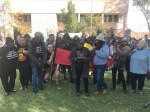
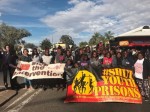
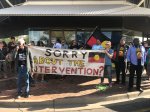
The following is a statement made in collaboration by participants of the StandUp2017 conference which concluded with a rally in Alice Springs today.
A national day of action (NDA) will be held when the current Northern Territory Royal Commission hands down its report in September. The NDA will demand an end to the Intervention, shut youth prisons and to bring the children home.
Website: rollbacktheintervention.wordpress.com
Facebook: www.facebook.com/InterventionRollbackActionGroup
youtube: www.youtube.com/user/Alt2Intervention/videos
Twitter: @IRAG_NT #StandUp2017 #stoptheintervention #NTIntervention #alicesprings
To arrange interviews please contact Media Liaison:
Meret MacDonald 0456 475 810 or Hilary Tyler 0419 244 012
STATEMENT
Rosalie Kunoth-Monks “You better believe it, when the Intervention first hit in 2007 community councils were decimated”
Matthew Ryan “Trying to get the government to listen to us, is like a brick wall.”
Elaine Peckham “When the Intervention came- they took away services from homelands. No health services. I had to move back to town. I didn’t want to.”
Yarrentye Arltere Larapinta Valley Town Camp: “Ten years too long. Ten years of hardship, neglect and broken promises. We want Aboriginal control for Aboriginal people by Aboriginal people. Apmereke Tweye and Kwertengwerle: Traditional owners and custodians: our Law, our Way.”
We need to keep our culture strong. We need to be in control of decision making. We want self-determination.
After ten years the Intervention has met none of its objectives. There are more people in jail, more children being taken away, there is more unemployment.
This StandUp2017 conference makes the following comments and call outs.
REPEAL RACIST INTERVENTION LAWS
Racist laws introduced through the Intervention have created apartheid and are still with us. Repeal the Stronger Futures laws. Repeal changes to social security law that allow for control over our money. End the ban on consideration of customary law in bail and sentencing. Bring back the permit system.
COMMUNITY GOVERNANCE
Ngarla Kunoth Monks: “We have our own structures, our voices have been put down and oppressed.”
The conference calls for restoring community councils and transferring assets back to the communities from the shires. This is what will improve peoples’ lives.
Town camps want more houses, more parks, childcare at the community centres, and control of their own money. There needs to be compensation for town camps. It’s time to pay the rent.
HOMELANDS
Veronica and Pamela Lynch: “Cultural and land management is real work.”
Sharon Anderson: “Give us back ownership of our lands, so we can benefit our own people through our law and culture.”
We need to create job opportunities on our homelands. We want to manage our own affairs through our own governance.
HOUSING
Barbara Shaw: “they took over community living areas and Aboriginal community housing rights.”
We can’t be healthy without proper housing as our foundation. We want to make decisions about our own housing. We want to have community control over our housing. We desperately need more houses on all communities and homelands.
EDUCATION
Valerie Paterson “We believe that our children learning in their first language are more confident in themselves and learn more efficiently. We have seen this with our own eyes. We know how to teach our children both ways too.”
Sylvia Neale “1 hour a day to teach their language, it’s not enough”
The government must promote bilingual education, and schooling in first languages. Stop punishing parents with fines and Centrelink breaches.
PRISON
Rosalie Kunoth Monks: “What I call for is action line, they are our children.”
Dylan Voller “If the government wants to help us they should come down to our communities and elders and see what they have to say”
There are many alternatives and improvements that could be made to the prison system. Communities can be supported to have more contact in prison and instead of prison, we need more healing spaces, Bush Mob is good.
The conference believes that children should not be transferred away from Alice Springs to Darwin. We also believe that youth prisons are not helpful, and that Don Dale needs to be closed.
We call for the closure of youth prisons, and a national day of action when the Royal Commission into protection and detention of children in the Northern Territory releases their final report.
JOBS
People used to have jobs in their communities – we need a new jobs program to bring this back. Now on CDP people are starving and being evicted from their houses. We need community control and ownership of community assets. Everyone who works needs at least the minimum wage. Real jobs must receive real wages and real conditions. We need a national movement. No more CDP. We support the First Nations Workers Alliance started by the Australian Council of Trade Unions.
INCOME MANAGEMENT
There is no evidence that compulsory income management works.
Vanessa Poulson: “I have learnt to live with basics card now but really would like to have control of my own money.”
Scrap compulsory income management
STOLEN GENERATIONS
It keeps going, and getting worse. With the money it takes to look after a stolen kid communities could fix their problems themselves. Stop stealing our kids. Urgently bring back the many hundreds of children taken through the Intervention. We are going to set up a GMAR group here. (Grandmothers against Removals). Yingiya Mark Guyula MLA can be contacted with names of stolen children and has pledged to fight to bring them home.
TREATY
Rev Dr Djiniyini Gondarra OAM: “Australia is the only Commonwealth country in the world that has never entered into negotiations to establish a treaty. There needs to be diplomatic dialogue between the Australian governments and the First Nations. No more kissing the government’s shoes.”
There must be recognition of our sovereignty which has never been ceded, and which has been undermined by the Intervention. Our law must be recognised by the Westminster system. The governments must stop creating more policy and measures for Aboriginal people without consultation.
Lift the ban on customary law.
We are ready for Makarrata.
Treaty now!
We stand together.
Sunday at #StandUp2017 – Messages of support
25 JunMessages of Support
Video Message from NRL player Joe Williams
Video Message from Black Comedy’s Elaine Crombie
Video Message from Black Comedy’s Steven Oliver
Message from Nova Peris
Indigenous former athlete and politician Nova Peris sent this message via Dylan Voller to be read to the conference: “We as Aboriginal and Torres Strait Islander people need to stand together in solidarity. The Northern Territory Intervention was seen by many, particularly those living on community, as an act of “war” declared by the Australian government on Aboriginal people.
We do no need constitutional recognition in an English founding document, we have never been lost. Eddie Mabo took on the High Court for ten years to prove our inherited responsibilities of over 50,000 years and to disregard the lie of a Terra Nullius.
The Northern Territory Intervention was partly about a land grab under the guise of other things that demonized us all as a race of First Nations people. We, as Aboriginal people are much more powerful that what the powers that be want us to believe.
We are sovereign people, our power is beyond measure, we need to understand this and use it to our advantage. As Vincent Lingiari once said, “power and privilege cannot move the people who know where they stand, stand in the law”. As sovereign people we need to start wielding and asserting our constitutional 116A power of religious and spiritual freedom, which we have sustained for over 50,000 years”.
Saturday at #StandUp2017 Housing, Community Governance, Education and Income Management
24 Jun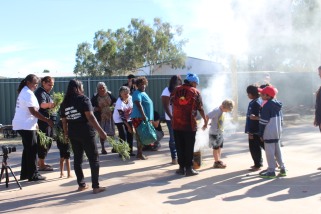
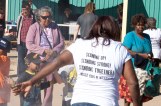
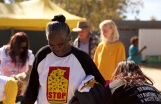
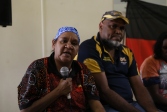
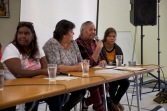
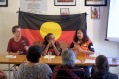
MBANTUA
SATURDAY : Smoking to open this morning – Panelists on Housing, Community Governance in the morning then Education and Income Management in the afternoon.
Follow the live feed on our facebook click here
Rosalie Kunoth-Monks on Community Governance from Utopia:
“Lets stand together, don’t let the corrupt monetary system separate us. We are one people, right from Tasmania, right up to the islands up north, we are one people. We are not going to be separated. We stand united, and when we say united we take away the trauma form our littles under us, don’t lip service and do nothing about it. No white person will try take over a our school in Utopia, no one. I will not be brought by anyone.”
Veronica Lynch on Community Governance
Arrernte, on the land rights fight for her homeland Black Tank, and the Intervention
“We moved onto a camp site onto pastoral lease, the council wanted to take us to court, we sand no we want to stay on our country. We won. They did a handover at the time. Two families got their land back and as a family group we instigated resource centre to help out people on their home land.
But since the intervention we have no voice and they don’t listen to us and have rights, the intervention is a rulebook regulated by OREC. They don’t respect out people , people on the ground. They believe in directors but we don’t believe in directors. Those directors don’t speak up for us.”
Vanessa Poulson on Community Governance
Pitinjarra women, Yuendumu roots. President of Karnte Camp.
My mother’s side has lived here for long time. I’m 34, have four kids, I am single and have raised them up for myself. When I think about the last two years, police arresting, more fines, more people locked up and no second chance, and kids don’t go to school because it is scary. Their people they don’t speak their language, and then family get fined and welfare taking more and more kids, and not looking after that family side. Taking kids away doesn’t work and takes a long time. And is no use. It happens a lot in town camps, welfare taking their kids.”
Matthew Ryan & Barbara Shaw on Housing
– from NT Aboriginal Housing Body
“Our kids are missing out on education, people say health and education. No it’s the foundation first. Get the housing. We want proper housing! Listen here, stop making decisions on behalf of us. Not you. We should have the first say not them. We come up with an idea and then they make up another idea and then scrap up our idea. Because of money? Always dictating.” – Matthew Ryan
Afternoon session:
Greens Senator Rachal Seiwert on Income Management
“Intervention – what’s it all about? We found out that people were not able to give evidence to talk to members of the committee who wanted to listen. And community assets were taken away and it quarantined 50% of peoples income support. Tangentyere were already doing income management for communities making savings. When Basics Cards were first brought in there was no plan to evaluate. No international evidence to show, the evidence we did see with Aboriginal experts said it wasn’t going to work. It was demonising, vilifying and demonising.”
Sharon Anderson on Education (Warlpiri, Lajamanu)
“In the Warlpari region trying to teach bilingual n 1982, we want to try keep bilingual education programs. To do this we need to try get people to understand. We need skills teacher linguists and teachers of English as a second language. Yapa leadership. Real honest power sharing and enough resources. We believe that our children in their first language more confident in themselves and learn more efficiently. We have seen with our own eyes to speak sing read in the mother tounge. And strong in Warlpari and English.
We know that bilingual education is an important way for families and schools and children to learn first and second language and culture. First language doesn’t just makes us strong. We have the right under the declaration of Indigenous Human Rights. Make sure you tell them to be equal with us. The government wants us to learn white people to learn but two way learning’s form yapa and kardiya.”
Yammurna Oldfield on Education from Yuendemu School
“We do cultural things, with old people every Friday, spears, humpys. We got one camp coming up and tell kids the dreaming’s, and its really good. After that we make books for literacy centre. ‘Going out camping’ title of one book.”
#StandUp2017 Opening Night Forum on the NT Intervention.
23 Jun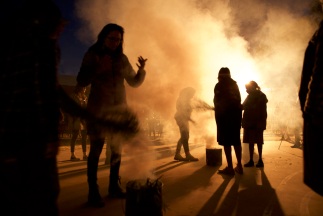
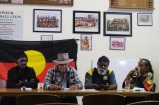
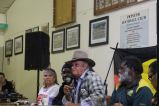
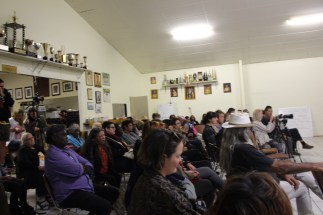
23 June 2017
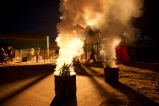
The first night of StandUp2017 was opened with a Healing Smoking from Akeyulerre Healing Centre. Followed by dinner and panelist talks from Barb Shaw, Elaine Peckham, Vincent Forrester, Frank Curtis, Rev Dr Djinyini Gondarra. Talking first hand of the impacts of the NT Intervention. The absolute horror pain and suffering people faced.
We are live streaming the talks from our Facebook. click here to go to our facebook.
Frank Curtis
who was a policeman when the Intervention came in 10 years ago –
“I used to be an APO, 26 years with the NT police. When it first came out in 2007, they got me to go in and search peoples houses. I said no. They wanted me to use the new Intervention laws to check the houses for alcohol. I said, ‘sorry family, it’s my job to search your houses’, even people who didn’t drink. I knew who drinks and who doesn’t, but it doesn’t matter who. I had to apologise to family. I felt ashamed and hurt, as a black policeman going through people’s houses/ I felt I had no right to go in there. It made me feel shame, wearing a policemans uniform. I said to a policeman, ‘How would you feel if I went through your house, looking through the cupboards, under the beds’. I said it to the Sargent – ‘how would you feel?'”
Vincent Forrester:
“I remember coming into Alice Springs to get my groceries and head back to Uluru. I sat down and had a cup of tea. I’ve got little lap dogs. My little dogs were going crazy. I walked outside, there were 9 coppers, all had a shot gun. They all had their finger on the trigger. In a squeaky voice I said, ‘don’t breathe boys’. Janine came up, she was a white girl.
They were going to blow me away.
They said all the men are alcoholics, we all bash our wives, we all pedophiles, none of us work. THey set us up with the Lateline program. A man in a black hat saying he was a youth worker in Mutitjulu. They put pictures of people petrol sniffing, but it wasn’t Mutitjulu.”
Rev. Dr. Djiniyini Gondarra:
“I challenged them. And we continue to live with the measures that they have created. All the measures. It’s the same as what happened in 50s or 30s, so called welfare time. We can’t wait another 10 years. Something must be done now. The leaders of today, we have to push very hard to stop them. They are creating another format of the Basics Card. Are we always going to be a puppet of a string for them? We were a nation once. It’s not to do with civilisations, industrialisation, modernisation, it was to do with people living here with law and order. This country was taken without negotiation. No treaty, nothing at all. We are still a sovereign nation, brothers and sisters. We have to fight for that sovereignty!”
Elaine Peckham:
“We all worked jobs, paid our rent, even on our own land, paid all our bills, still we had to be under the Intervention and were given the BasicsCard. I went around to my son’s place one day and he said, ‘you better go down to Centrelink, things have changed, you need to go down’. I was shocked, I couldn’t believe what was happening. The first day I went into Centrelink, I went around me and saw all these men and women in suits with briefcases. And our people standing in big lines, waiting to be told they were going to be put on the BasicsCard and have changes to the pension. I can vividly remember all that.
I sat down and had my interview. It was such a shock. They had computers set up, to play messages in language. It was all in front of us, before I eyes. I said, ‘I can speak English very well’, it was just to discriminatory. I asked for a manager after I had my interview. I was not allowed that, they said they were too busy. They led me out to this young Aboriginal woman. She said, ‘I heard you aren’t happy with your interview’. I said, ‘No, I don’t like the way we are being treated and spoken to. Look around you in this room, anyone here today could be your family, your aunty or uncle’.”
Barbara Shaw:
“A lot of money has been spent trying to ‘save us’… I was in my living room that night. My daugher was 2 years old. She’s a lot taller than me now. She lives it, we all still live it. With compulsory land acquisition, the government still has control of communities. That was the way the Shire came in as well, that was another way to control us as well.”
Call out information about the Stand Up 2017 event – 10 years too long
15 Jun10 years of intervention 10 years too long.
Stand Up Conference happening this weekend at the Pioneer Shed in Alice Springs MBANTUA stay tuned and come along. programme available here.
Elaine Peckham and Doreen Carroll invite people to the upcoming Intervention meeting – Standing Up Standing Strong, from June 23 – 26 2017. see home page for programme.
Barb talks about the upcoming 10 years too long Intervention meeting June 23 -26:

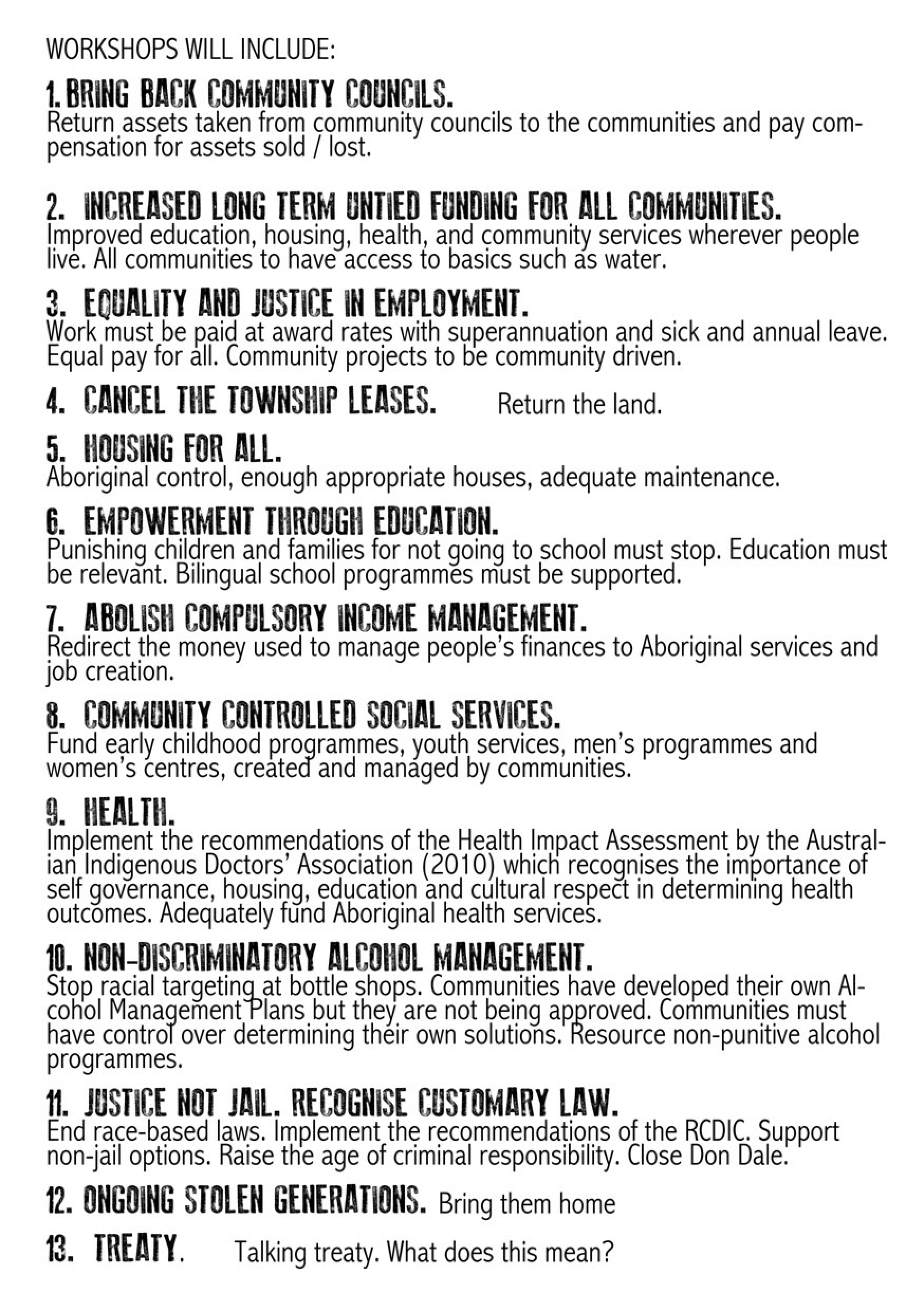
PROGRAMME: STANDUP2017: 23 – 26 JUNE 2017
FRIDAY night 23rd June
Panel of people directly affected
SATURDAY 24th June
9-10: smoking/ welcome
10-11: panel: community councils, housing
11-1 workshops
a. community governance – how do we bring back control? – Ngarla Kunoth-Monks (Alekerre First Nation Cultural Trust, Utopia)
b.housing –what do we need and how do we get it? -Barb Shaw and Matthew Ryan (NT Aboriginal Housing)
1-2 lunch
2-3 panel: Income Management, Education
3-5 workshops
a. income management – how do we want to manage our money? – Senator Rachel Siewert (Greens)
b. education –bringing back culture – TBC
SUNDAY 25th June
9-10 panel: jobs/ justice
10-12 workshops
a. jobs –how do we protect our rights? -Celeste Liddle (NTEU) (blog: Rantings of an Aboriginal Feminist)
b. prisons – too many in jail – how do we work towards justice? -Dylan Voller, Vickie Roach
12-1 lunch
1-2 panel: Stolen generations/ Treaty
2-4 workshops
a. stolen generations – bringing them home – how to build a movement -Aunty Hazel
b. treaty – what do we want? -Pat Ansell Dodds (Arrernte and Anmatjere elder), Yingiya Mark Guyula (Yolngu MLA)
MONDAY 26th June
9-12 feedback
1-5 action
LOGISTICS
We have limited cabins for elderly/people with mobility issues, and have a campground set up less than 5 minutes walk from the Pioneer Shed for people to use. NO COST.
We will be providing 3 meals a day for people attending StandUp2017. NO COST/DONATION
We can reimburse fuel costs for travel from communities in the NT.
We are seeking volunteers to help with numerous roles such as scribes, drivers, food prep, set up and pack down, media etc.
Please contact us if you need further details on any of the above on 0457 574419 or email: rollbacktheintervention@gmail.com or on fb IRAG – Intervention Rollback Action Group – Alice Springs .
BACKGROUND
10 years ago on June 21 2007 the NTER (Northern Territory Emergency Response, aka the Intervention) was announced. The legislation took control of Aboriginal land, and Aboriginal people’s money. Customary law was targeted. Government business managers were imposed on communities. People were demonised around alcohol and pornography. The Racial Discrimination Act needed to be suspended to pass the legislation.
At the same time the NT government shut down community councils, replacing them with ‘mega shires’.
The Labor government changed the name to Stronger Futures but it was the same thing.
The ten years have not seen improvements. More people are in prison, there are more people unemployed, and more children are being taken away from their families than during the Stolen Generations. Overcrowding remains high. What was the Intervention meant to achieve?
There will be a convergence from June 24 -26 2017 in Alice Springs. Barbara Shaw is calling out to people to come together to talk about it all, and work together to come up with ways to overcome these problems. We want to talk about all the issues, such as youth (in)justice and children being taken from their families.
You can see Barb’s call out at
We’d love to see you here.
Write to us if you’d like to come… rollbacktheintervention@gmail.com
Or call us on 0457 574 419
More information coming.
In solidarity,
IRAG
MORE INTERVIEWS:
See here Pat Ansell Dodds, a local Arrernte woman, talking about Treaty February 2017 at Telegraph Station
See here Que Kenny talk about the impacts of the Intervention on N’taria
10 YEARS OF THE NORTHERN TERRITORY INTERVENTION
2007 – 2017
In 2007, after years of neglect and despite reports over the years into problems in remote communities, and just before a federal election, the Howard government announced the Northern Territory Emergency Response (Intervention).
After 5 years the NTER was supposed to: “Stabilise, Normalise, Exit”.
Community members were shocked. They had told their stories for the “Little Children Are Sacred” report in good faith and trusted the report would be used to help them deal with the important issues. Instead a national emergency was announced with plans to send in the army. A package of laws was introduced to bring in the emergency response and several laws were affected including:
Racial Discrimination Act 1975, Aboriginal Land Rights (NT) Act 1976,Native Title Act 1993 (Clth), NT Self Government Act, Social Security Act 1991.
The Intervention powers included:
. Takeover of 73 ‘prescribed communities’ for 5 years
. Legal powers to seize community assets
. Banning customary law as a defence in court sentencing
. Banning of alcohol and pornography in the prescribed communities
. Branding of all those communities with huge blue and white signs:
“No Alcohol No Pornography”
. Regulation of community stores
. Quarantining of social security entitlements (Basicscard)
. Compulsory child health checks
. Phasing out CDEP (which provided most work on communities)
. Putting police in many communities, “Star Chamber” powers for police to invade homes without warrants
. Government business managers to oversee government business in all prescribed communities and report back to government
Negative Effects of the NTER
. Giving all Aboriginal communities in the Northern Territory a bad name which had a flow-on effect to other Aboriginal people around the country
. Demonising of men as abusers and perpetrators
. Increase in racism in the NT particularly, and around the country
. Aboriginal communities and organisations no longer running their own affairs
. Huge increase in prison rates for Aboriginal people mainly because of non-criminal offences such as unroadworthy vehicles and non-payment of fines etc
. Unfairness in the justice system as customary law no longer allowed in sentencing
. Huge increase in attempted self harm/suicide rates
. Big rise in numbers of bureaucrats and NGO workers in prescribed areas.
. Increase in mental illness and loss of sense of wellbeing (hopelessness)
. Increase in alcohol consumption
. Increase in numbers of children being taken from families, due mainly to neglect and tough living conditions
Other Effects of NTER
Some positive health outcomes through ‘Closing the Gap’ programme, due to massive injection of funding (could have happened without an intervention)
KEY MEASURES OF THE INTERVENTION
Government Business Managers
Were appointed to be based in all remote prescribed areas. Special secure compounds were built and the GBMs were given the power to attend community meetings, report back to government on government and community business and seize control of community assets.
Income Management
Social Security laws were amended and the Racial Discrimination Act set aside so that Centrelink in the NT could quarantine the income support payments of Aboriginal people. This at the start was 50% and applied to everyone but was later changed so that some aged and disability pensioners were exempt but were under considerable pressure to stay on the scheme.
Whilst supposing to protect vulnerable people and help with budgeting, in fact life became harder for many as not all shops could cater for this card. People were made to line up in separate queues in some shops which led to them being singled out for racist comments and feeling ashamed. When the Centrelink system was not working, people weren’t able to buy the goods they needed.
Alcohol and Pornography
Huge blue and white signs were put up at entrances to all prescribed areas in the Northern Territory saying that having alcohol or pornographic material was illegal and would bring heavy fines. These signs caused great shame to many people and some had to explain to young children what pornography was. People began to travel long distances to buy alcohol and would then drive back to the boundary of their community and drink there. Black market sales of alcohol increased. People were worried that family members might have driving accidents. Bottle shops were policed, first with the Banned Drinkers Register, and then through strict policing of Aboriginal people.
Legal (Statutory) Powers to seize community assets
This measure tied in with the NT government’s introduction of the Shire system of local government, and many community assets such as computers, road maintenance equipment, buses etc. were given over to the new shires or in many cases sold.
Increased Police Powers
Police were given extra powers to randomly search houses in prescribed areas to check on alcohol possession and consumption. This could happen any time of the night. Communities where there had previously been no police stationed now had police compounds erected and police installed. Much police time has been spent doing vehicle checks and imposing fines for minor driving offences which impacted deeply on low income people and has led to an increase in the number of people going to jail.
Scrapping of CDEP
The phasing out of CDEP, along with the setting up of the shire system throughout the NT, led to increased unemployment in communities. CDEP had been a community-driven program with jobs that communities decided needed to be done. Working hours were flexible which suited many community members as it helped with their cultural and family business. It was rapidly phased out after the Intervention started. The shire system took away community control and had its base at a centre hundreds of kilometres away. Work that had been done by community members was now contracted out.
Compulsory 5-year leases
Compulsory 5-year leases saw the take-over of prescribed areas which included buildings and housing stock. The Northern Territory government now took control of all community housing and higher rents were imposed whilst managing of maintenance became a slow and unsatisfactory process. Eventually rent was paid to compensate for the 5-year leases but this funding came from the people’s own money – their ABA or royalty funding.
Regulation of community stores
Outback Stores, a government agency, set up or took over stores in remote communities and became the only place where residents could use their BasicsCard.
Banning of customary law in sentencing
Customary law could no longer be included in the court system for bail or sentencing, which made this unfair for many Aboriginal offenders. For example, driving grandmothers to a funeral in an unlicensed car could not be taken into account.
Compulsory child health checks
Compulsory child health checks were included in the NTER laws. The health checks duplicated the good work that was already being carried out by the clinics at huge cost. The checks initially were going to be for evidence of sexual assault, which would have been assault in itself.
After much community protest and objections from the Australian Indigenous Doctors’ Association, these compulsory checks did not happen.
Stronger Futures
In 2012, after ‘gammin’ consultations, Minister Macklin introduced Stronger Futures laws which continued the Intervention for another 10 years.
The Stronger Futures laws included harsher penalties for parents whose children didn’t attend school every day, over-riding powers for the Minister to allow development on Community Living Areas without following proper process, and continuing banning of customary law.
Unemployment has not improved on communities and many people now have to work for CDP, that is they work for the dole which is below award wages with no top-up or other benefits. The ‘employment programmes’ are run by job providers who benefit from workers being penalised. There are strict penalty measures if workers fail to turn up for ‘work’ or job interview, a situation which is putting many in even more debt with unpaid fines.
Billions of dollars have been poured into Stronger Futures but very little is hitting the ground, that is supporting communities and empowering people to run their own affairs.
In 2013 the Parliamentary Joint Committee on Human Rights found that although Stronger Futures legislation had repealed the NTER legislation it had retained 3 key policy elements:
- Tackling alcohol abuse measures
- Land reform: amendments to community living areas and town camps
- Food security
Stronger Futures expanded income management through the BasicsCard and increased it to 70%. It increased penalties relating to alcohol and pornography. It expanded the policy linking school attendance and continued welfare payments. It introduced ‘licences’ for community stores.
There was criticism that proper consultation did not take place before these measures were brought in.
In 2014 Abbott supported continuing the intervention and stressed the importance of ‘closing the gap’ with a focus on school attendance. However, this was followed by massive budget cuts and the reducing of 150 Indigenous programs into 5 core programs with cuts to Aboriginal legal and health services, early childhood education, and child care.
In March 2016 the most recent Parliamentary Joint Committee on Human Rights Review into Stronger Futures recommended (1) a review of customary law (2) evidence-based review of alcohol restrictions (3) streamlining of approval of AMPs and amendment of legislation to remove power of Minister to refuse approval (4) income management found not to be effective and should require formal request by a particular community (5) doubts as to effectiveness of SEAM (school attendance measures) – this needs redesigning and needs social worker support.
Where to from here?
Stronger Futures is planned to continue for another 5 years. In the meantime the situation is becoming worse for many Aboriginal people in the Northern Territory.
Housing has not kept up with community needs.
Repairs and maintenance are not carried out on a regular or timely basis and are expensive (even though all tenants now pay rent).
Jobs for many people are ‘working for the dole’ and people are fined if they miss an interview or don’t work for some reason. This means less income for people already struggling.
The land is still under threat from exploration and other issues. Native Title is being threatened – the government wants to be able to over-ride traditional owner decisions.
More people are going to jail. Often people are fined for traffic and other minor offences such as unroadworthy cars. They can’t pay their fines and end up going to jail. Life can be a struggle when income is low and costs are high.
More and more children are being removed from families. Lack of understanding by government workers and authorities means wrong assessments are made, or are made from whitefella eyes and mind, without looking at other ways of caring for children such as other family members and support that family needs.
Government and independent reports over the ten years of intervention keep saying the same – that things won’t improve until Aboriginal people are running their own affairs.
The United Nations Declaration on the Rights of Indigenous Peoples (which the Australian Government endorsed in 2009) says in part:
“Article 3: Indigenous people have the right to self-determination … freely determine their political status and freely pursue their economic, social and cultural development.”
“Article 4: Indigenous peoples, in exercising their right to self-determination, have the right to … self-government in matters relating to their internal and local affairs, as well as ways and means for financing their autonomous functions”.
“Article 5: Indigenous peoples have the right to maintain and strengthen their distinct political, legal, economic, social and cultural institutions.”
“Article 7(2): Indigenous peoples have the collective right to live in freedom, peace and security as distinct peoples and shall not be subjected to any act of genocide or any other act of violence, including forcibly removing children of the group to another group.”
There are many rights within this Declaration including the practise and revitalise cultural traditions and customs, teaching of religious traditions, customs and ceremonies, the right to remain on land and not be forced to move, and people’s right to their own education systems, to have their own media, the right to be involved in decisions and policy-making that affects them, and the right to compensation.
STAND UP 2017 CAMPAIGN
Standing Up! Standing Strong! Standing Together!
The Intervention Rollback Action Group, led by Barbara Shaw, has been working since 2007 to help people deal with the effects of the intervention and speak up on their behalf. People lost energy when Labor and Liberals passed the Stronger Futures laws but now, realising that life for most people living in prescribed areas right through the Northern Territory is not getting any better, a big gathering will be held in Mparntwe-Alice Springs from 24th – 26th June 2017 to bring together people from communities and others struggling with Intervention issues to map out a way forward, work out where they want to be and plan how to get there.
CRUNCH TIME
This is crunch time. We are losing too many people to ill health, suicide, jail, children being taken away, mental illness, drug abuse and so on.
We need communities to choose at least two people, man and woman, young people or elders, to come to Mparntwe-Alice Springs at the end of June to join in respectful talks to give their community’s ideas and help with this plan.
We hope to workshop most of the main issues and are also putting Treaty on the agenda.
The Intervention/Stronger Futures laws aren’t working for people, they are making things worse.
IT’S TIME TO TAKE BACK THE POWER
This information sheet was prepared by the Intervention Rollback Action Group for the Stand Up 2017 Campaign. Inquiries to 0457 574 419 email: rollbacktheintervention@gmail.com
Programme for StandUp2017
30 MayFRIDAY night 23rd June 6-9pm
Panel of people directly affected:
Elaine Peckham, Barb Shaw, Vincent Forrester
SATURDAY 24th June
8-9 breakfast
9-10: smoking/ welcome
10-11: panel: community councils, housing
11-1 workshops
a. community governance – how do we bring back control? – Ngarla Kunoth-Monks (Alekerre First Nation Cultural Trust, Utopia), Pamela and Veronica Lynch (Blacktank), Vanessa Poulson (President Karnte camp)
b.housing –what do we need and how do we get it? -Barb Shaw and Matthew Ryan (NT Aboriginal Housing)
1-2 lunch
2-3 panel: Income Management, Education
3-5 workshops
a. income management – how do we want to manage our money? – Senator Rachel Siewert (Greens)
b. education –bringing back culture and language – Sharon Anderson (Warlpiri, Lajamanu), Valerie Patterson (Warlpiri, Lajamanu)
SUNDAY 25th June
8-9 breakfast
9-10 panel: jobs/ justice
10-12 workshops
a. jobs –how do we protect our rights? -Celeste Liddle (NTEU) (blog: Rantings of an Aboriginal Feminist)
b. prisons – too many in jail – how do we work towards justice? -Dylan Voller, Vickie Roach
12-1 lunch
1-2 panel: Stolen generations/ Treaty
2-4 workshops
a. stolen generations – bringing them home – how to build a movement -Aunty Hazel
b. treaty – what do we want? -Pat Ansell Dodds (Arrernte and Anmatjere), Yingiya Mark Guyula (Yolngu MLA), Thalia Tane (Maori, Aotearoa)
MONDAY 26th June
8-9 breakfast
9-12 feedback and closing
12-1 Lunch
1-5 action
LOGISTICS
We have limited cabins for elderly/people with mobility issues, and have a campground set up less than 5 minutes walk from the Pioneer Shed for people to use. NO COST.
We will be providing 3 meals a day for people attending StandUp2017. NO COST/DONATION
We can reimburse fuel costs for travel from communities in the NT.
We are seeking volunteers to help with numerous roles such as scribes, drivers, food prep, set up and pack down, media etc.
Please contact us if you need further details on any of the above on 0457 574419 or email: rollbacktheintervention@gmail.com or on fb IRAG – Intervention Rollback Action Group – Alice Springs . Or comment here.
 Rollback the Intervention